
Zero Statistical Guesswork
Instant Point Estimation and 95% CIs for EC50, LC50, LD50, and IC50.
Stop struggling with manual model selection for Point Estimation.
ToxGenie evaluates your dataset’s properties and automatically applies the optimal point estimation method.
30-Day Free Trial • No Credit Card Required • Windows OS Only
Smart Routing Based on Your Data's DNA
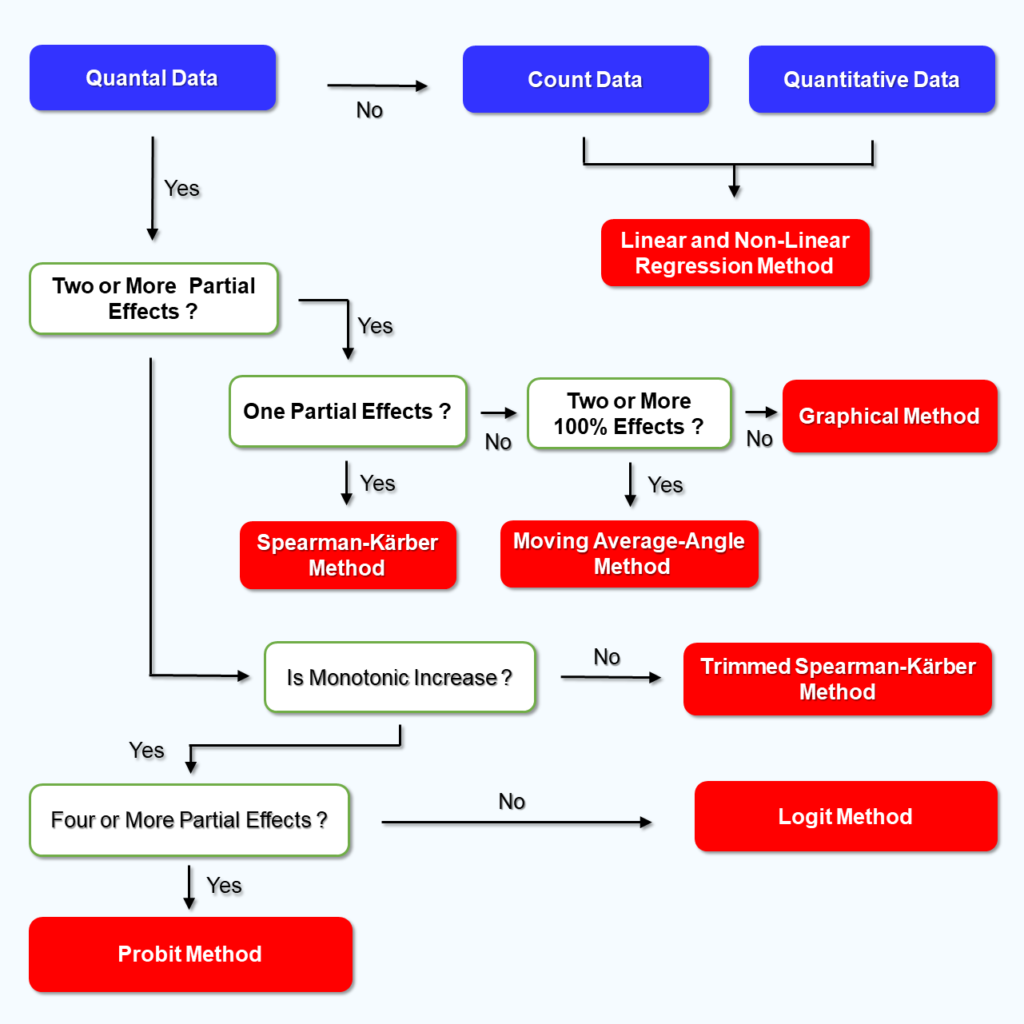
We don’t force a fit. ToxGenie’s intelligent decision tree strictly evaluates your input data to prevent convergence failures and statistical errors.
Classification & Batch Processing
Simply select your data type upon upload. ToxGenie automatically analyzes every inputted column independently, regardless of the number of columns, in one seamless run.
Quantal Data Evaluation
For Quantal data, the engine automatically and continuously evaluates the number of partial effects and checks for monotonicity to assign the optimal point estimation model.
Continuous Data Optimization
For Count and Quantitative data, ToxGenie automatically executes the Best Linear or Non-Linear Model Selection to ensure the
7 Industry-Standard Point Estimation Methods
Depending on your data’s evaluation, ToxGenie automatically deploys one of the following point estimation methods to ensure the narrowest and most accurate 95% Confidence Intervals.
Perfect Environment Canada Alignment. Total Trust.
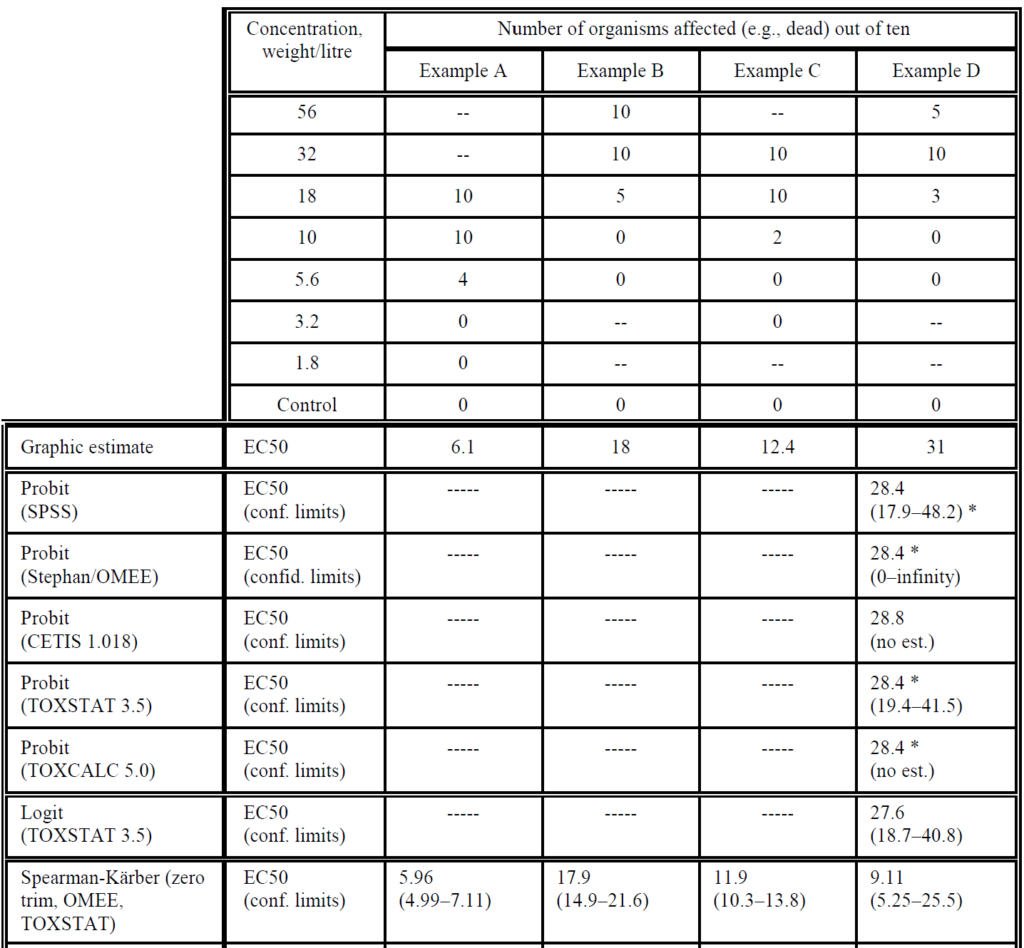
We processed identical toxicity datasets from official Environmental Canada Reports (EPS 1/RM/46), and ToxGenie’s outcomes matched perfectly. This proven consistency ensures you can fully trust ToxGenie with your most critical scientific data.
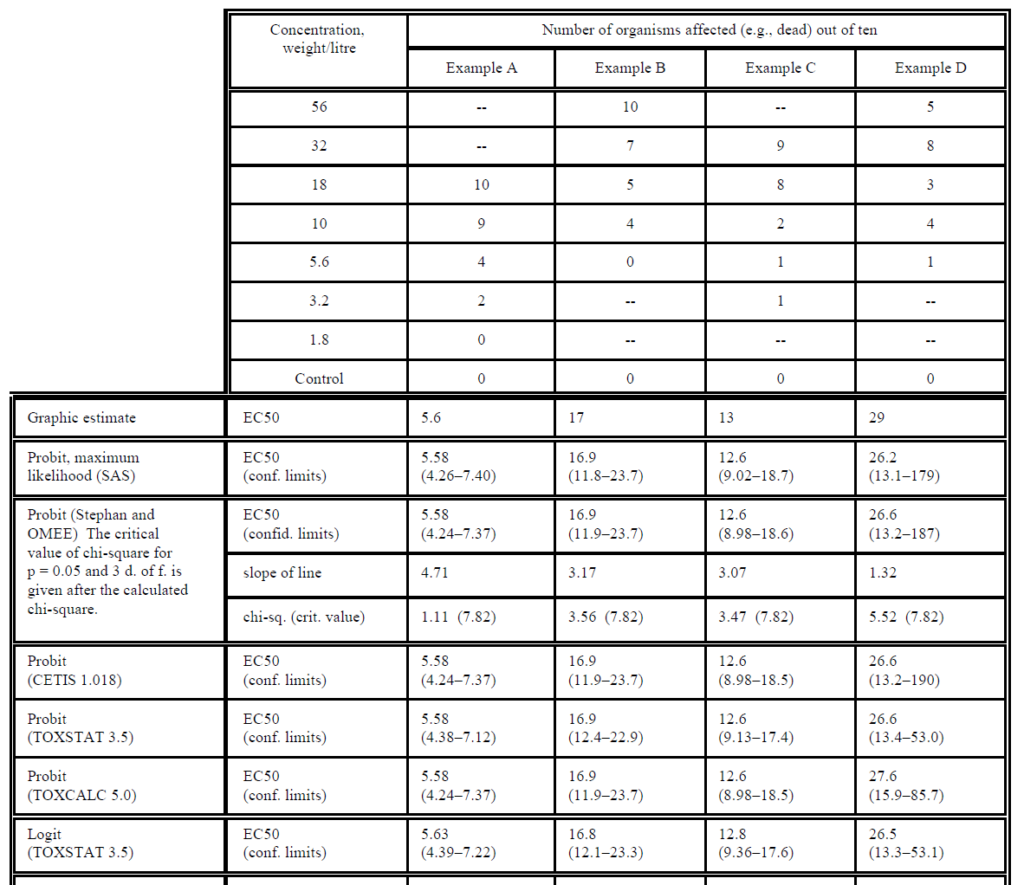
Example A Data Analysis
Logit Method
ToxGenie analyzes the characteristics of the input data and automatically selects the Logit Method based on a decision tree.
Proven Accuracy and Reliability
ToxGenie yields results highly consistent with established methods, ensuring exceptional accuracy and reliability in its automated analysis.
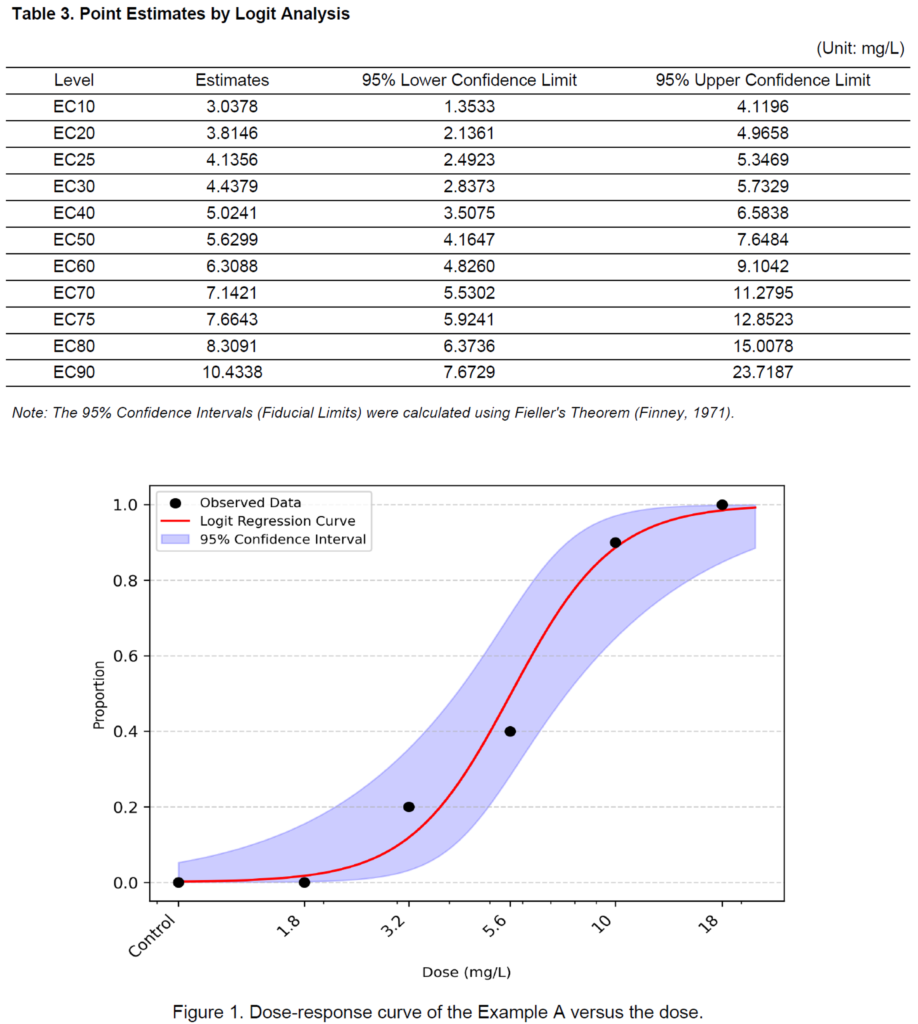
Example C Data Analysis
Probit, Maximum Likelihood Method
ToxGenie analyzes the characteristics of the input data and automatically selects the Probit, Maximum Likelihood Method based on a decision tree.
Proven Accuracy and Reliability
ToxGenie yields results highly consistent with established methods, ensuring exceptional accuracy and reliability in its automated analysis.
Perfect US EPA Alignment. Total Trust.
We processed identical toxicity datasets from official US EPA Reports (EPA/600/4-85/013), and ToxGenie’s outcomes matched perfectly. This proven consistency ensures you can fully trust ToxGenie with your most critical scientific data.
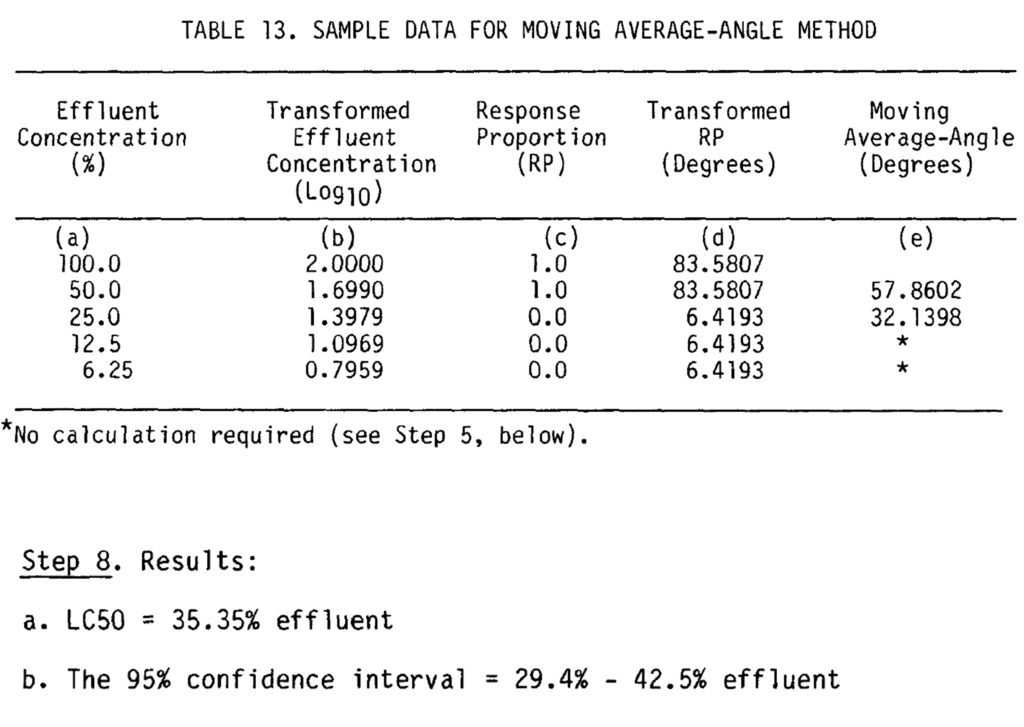
Example D Data Analysis
Moving Average-Angle Method
ToxGenie analyzes the characteristics of the input data and automatically selects the Moving Average-Angle Method based on a decision tree.
Proven Accuracy and Reliability
ToxGenie yields results highly consistent with established methods, ensuring exceptional accuracy and reliability in its automated analysis.
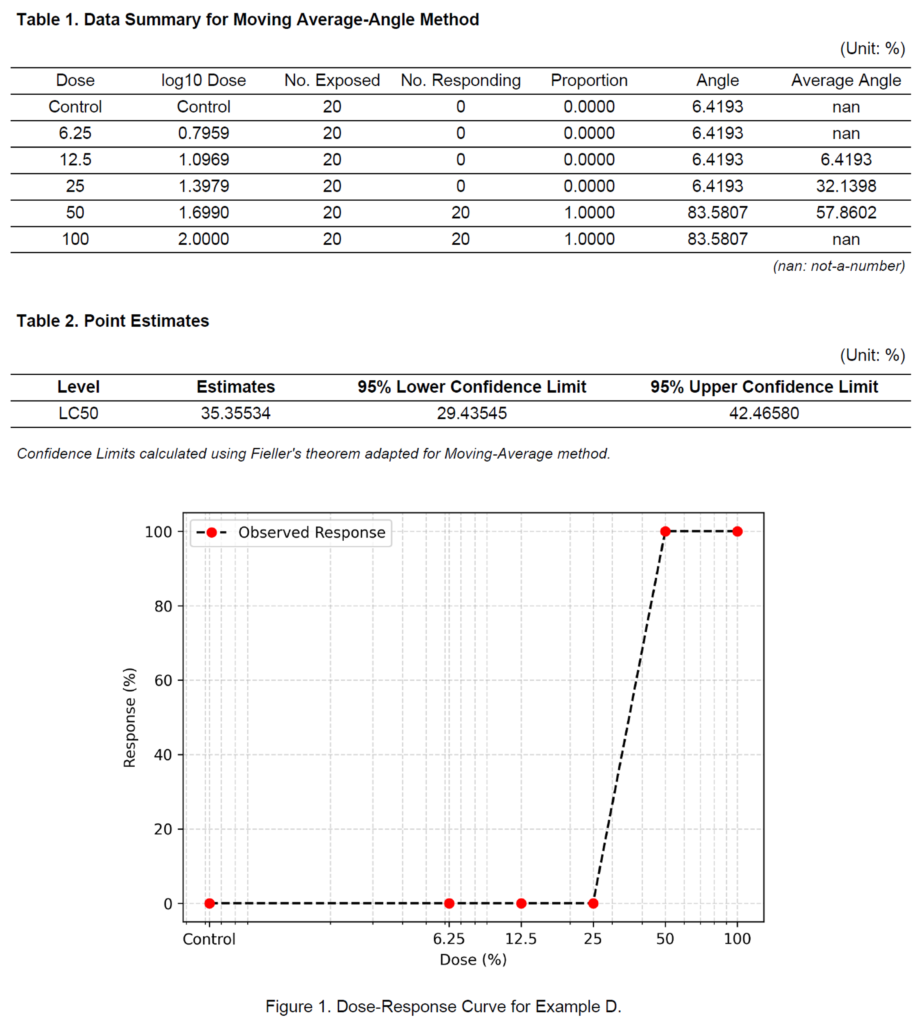
We processed identical toxicity datasets from official US EPA Reports (EPA/600/4-91/021), and ToxGenie’s outcomes matched perfectly. This proven consistency ensures you can fully trust ToxGenie with your most critical scientific data.
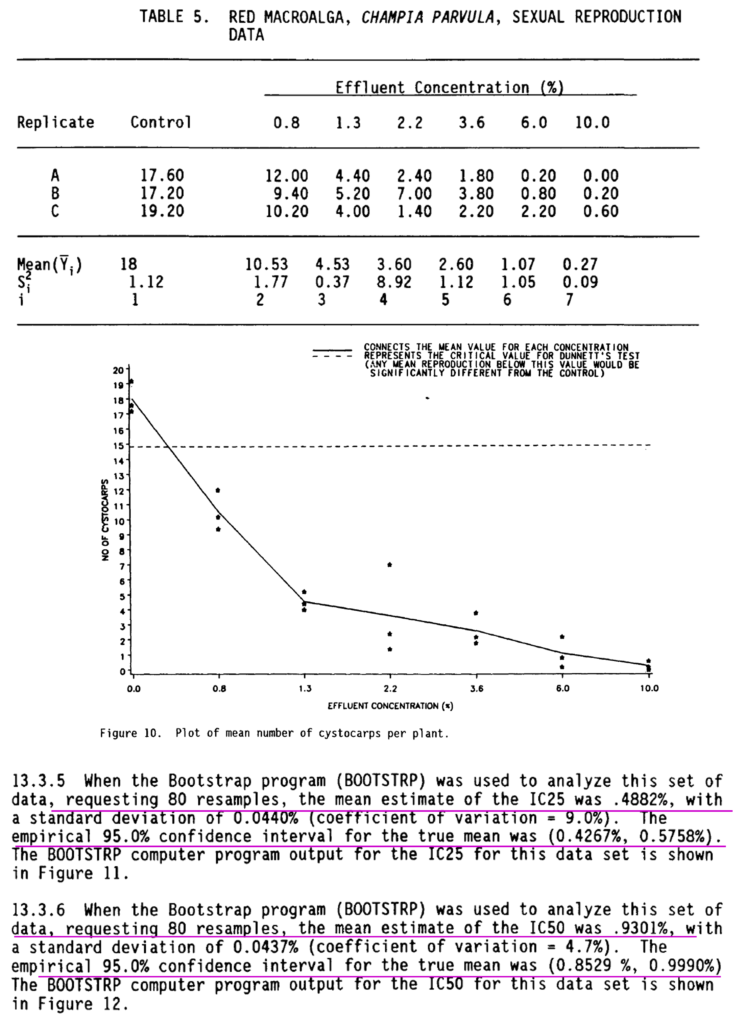
“For the point estimation of the quantitative data, a non-linear regression model was primarily utilized. In accordance with the guidance provided in the OECD Series on Testing and Assessment No. 54, fitting the concentration-response data to an appropriate non-linear regression model is prioritized over linear interpolation.”
Example IC25, IC50
Log-Logistic Regression Model
ToxGenie analyzes the characteristics of the input data and automatically selects Log-Logistic Regression Model based on a decision tree.
Proven Accuracy and Reliability
ToxGenie yields results highly consistent with established methods, ensuring exceptional accuracy and reliability in its automated analysis.
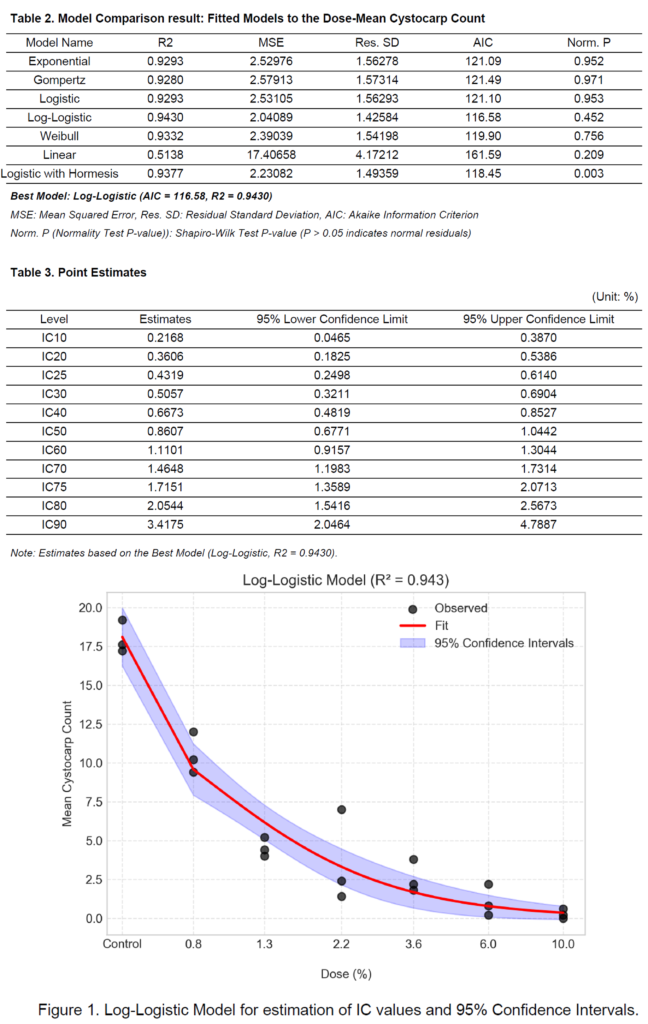
We processed identical toxicity datasets from official Environmental Canada Reports (EPS 1/RM/46), and ToxGenie’s outcomes matched perfectly. This proven consistency ensures you can fully trust ToxGenie with your most critical scientific data.
SK Example A Data Analysis
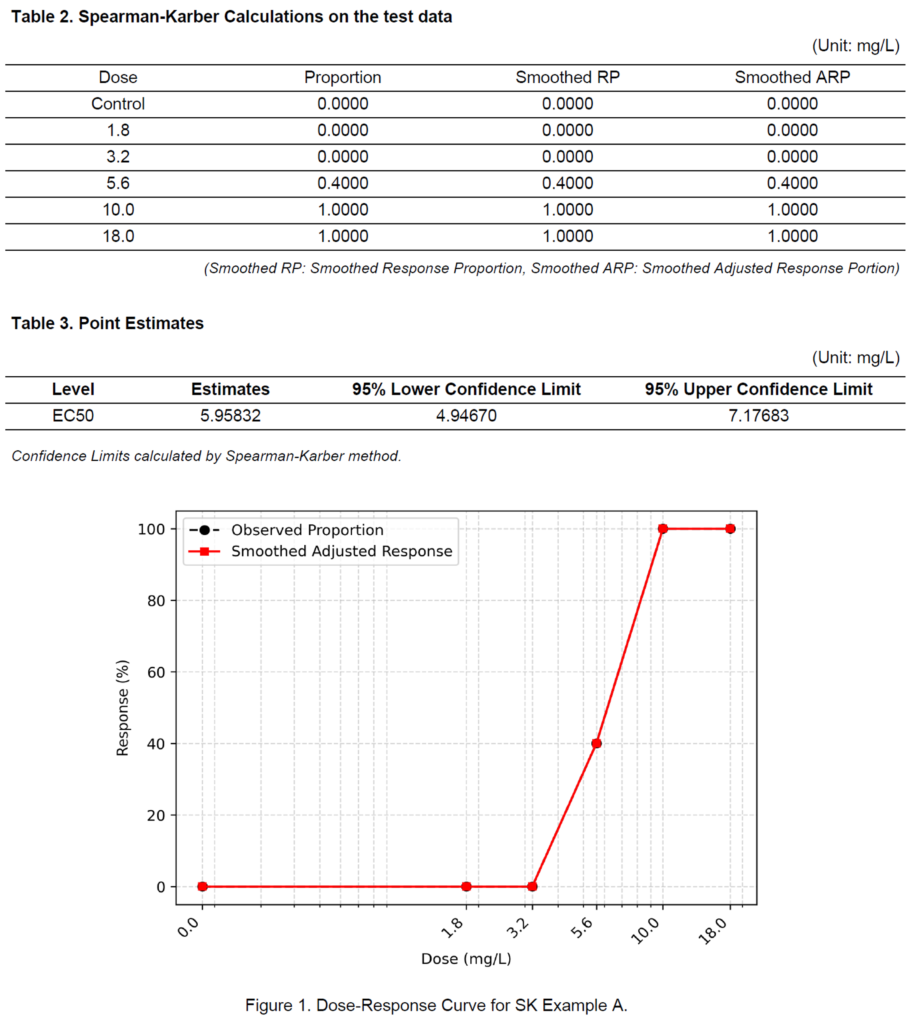
Spearman-Karber (SK) Method
ToxGenie analyzes the characteristics of the input data and automatically selects the SK Method based on a decision tree.
Proven Accuracy and Reliability
ToxGenie yields results highly consistent with established methods, ensuring exceptional accuracy and reliability in its automated analysis.
Fully Transparent Reporting. Ready for GLP & Peer-Review.
ToxGenie eliminates the “Black Box.”
Generate comprehensive statistical reports that include the exact rationale for model selection.
User-Selected Formats
Output your final report in either PDF (for secure, audit-ready archiving) or MS Word, depending on your current needs.
Manuscript & GLP Ready
Highly requested by our beta testers. Export to MS Word to seamlessly copy and paste the statistical rationale, tables, and graphs directly into your GLP Final Reports or academic papers.
Defensible Rationale
Every report explicitly justifies why a specific statistical method was applied, providing you with perfect defensibility for regulatory submissions (OECD, EPA).
How does ToxGenie resolve convergence failures commonly seen with parametric models like Probit or Logit?
Unlike basic statistical packages that simply return an error, ToxGenie’s engine evaluates the number of partial effects and monotonicity in real-time. If the data lacks sufficient partial effects for Maximum Likelihood Estimation to converge, the system automatically bypasses the parametric model and routes to appropriate non-parametric alternatives (e.g., Spearman-Karber or Graphical Method), detailing the shift in your final report.
Can I process multiple datasets (e.g., different chemicals or varying time points) simultaneously?
Yes. ToxGenie is built for high-throughput batch processing. You can upload a single CSV file containing multiple data columns. The algorithm will treat each column as an independent dataset, automatically evaluating partial effects and routing each column to its own optimal statistical method in one seamless run.
Are the statistical outputs and rationale sufficient for OECD test guidelines and GLP Final Reports?
Absolutely. ToxGenie’s decision tree is strictly aligned with recognized regulatory guidelines (e.g., OECD Series on Testing and Assessment). By exporting to MS Word, you receive not only the ECx/LCx values and 95% CIs but also the explicit statistical rationale required to defend your methodology during peer reviews and regulatory audits.
Ready to automate your toxicology analysis?
Join the researchers and GLP contract research organizations saving hours on every study.